Rafie Lab

Author name: elber.risouza@outlook.com

News

The lab is growing – We welcome Victor and Amanda

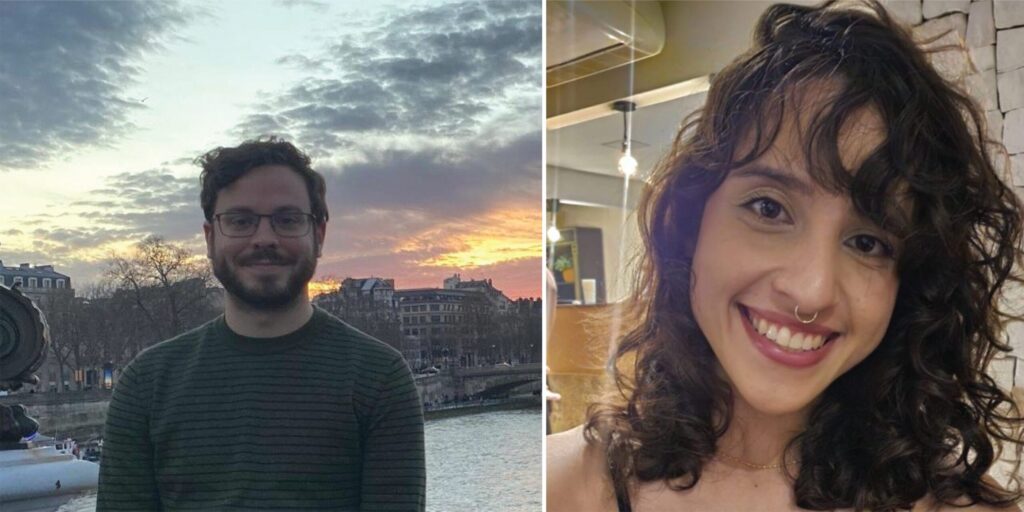
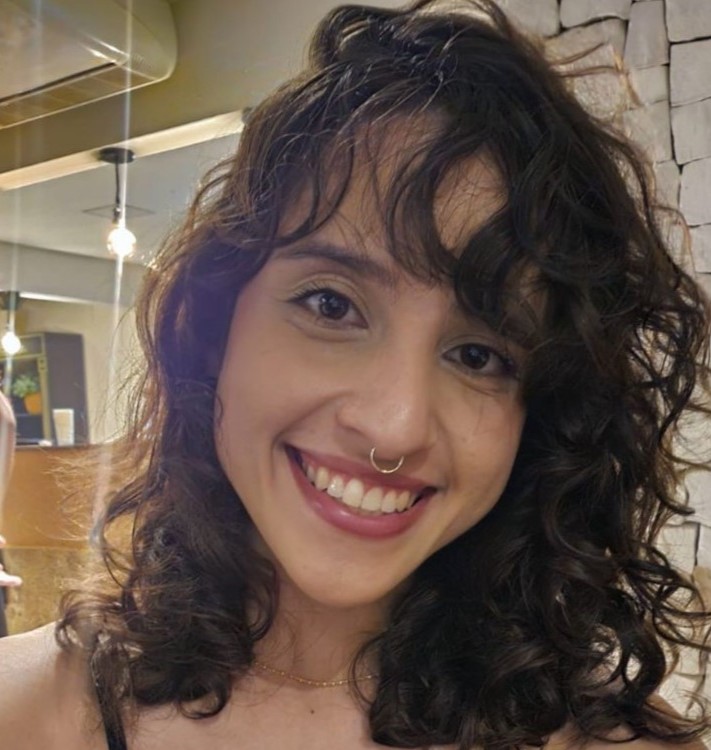
We’re excited to share that two new members have joined the Rafie Lab family: Victor Gawriljuk Ferraro Oliveira, who is starting as a postdoc, and Amanda Estevam Carvalho, a visiting PhD student from Brazil. 🎉

Victor has a background in structural biology and has spent the last few years studying how different infectious diseases work at the molecular level. He’ll be diving into the fascinating world of adenoviruses here in the lab, helping us understand how viral proteins function and how we might outsmart them.

Amanda joins us from Brazil, where her PhD work normally focuses on the lung. She’s here for a short stint in virology, exploring how adenoviruses use their proteins to kick-start and maintain infection. During her visit, she’ll be helping us identify viral “weak spots” that could inspire the development of new antiviral strategies.

Both Victor and Amanda will be working on projects centered around understanding how adenoviruses (and their proteins) promote infection — all with the goal of helping us design better, smarter antiviral approaches in the future.

We’re thrilled to have them on board. If you see them around the lab or department, please say hello and make them feel welcome! 😊
Members, Postdocs

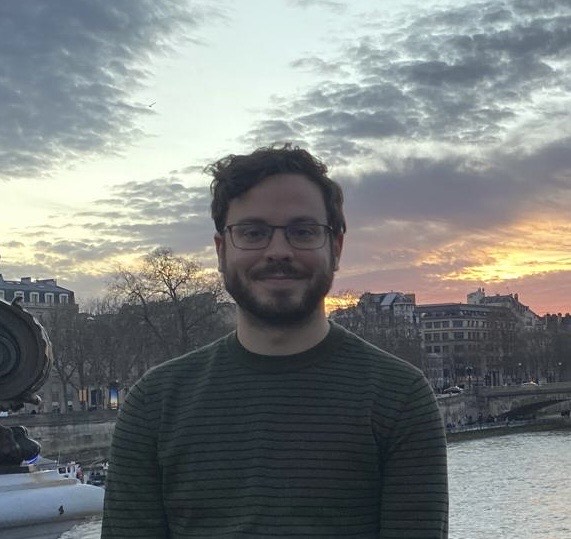
Victor Gawriljuk Ferraro Oliveira

Victor Gawriljuk Ferraro Oliveira obtained his Bachelor and Masters degree in Physics and Biomolecular Sciences at the University of São Paulo in 2021, he then started his PhD at the University of Groningen under the supervision of Prof. Dr. Matthew Groves. Since his Masters Victor’s research had been mainly focused on the structural biology and drug discovery for different infectious diseases. Now as a post-doc at the Rafie Lab he is currently working with the structural and functional characterization of different adenovirus targets.

News

The Rafie lab attends the 16th International Adenovirus Meeting in Cardiff

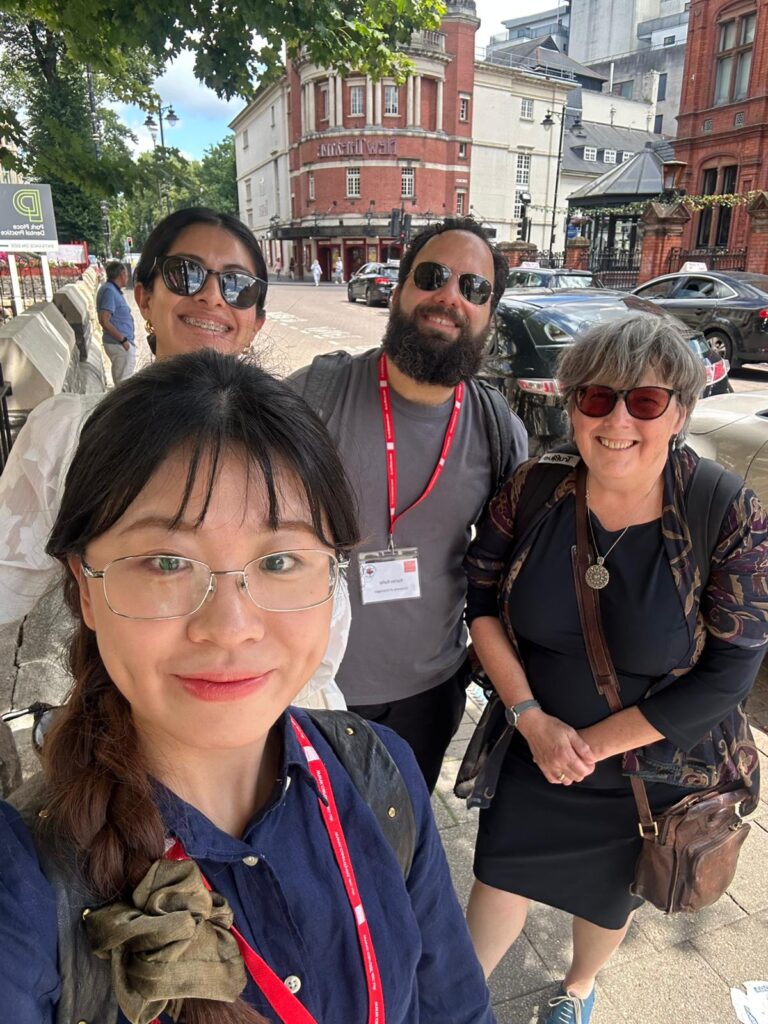
Has it really been 2 years….? Indeed, it has, which made the Rafie lab’s trip to attend this year’s international adenovirus meeting even more exciting!! Together Ana, Xiaoyu, Martina, and Karim travelled to Cardiff for a week’s long conference that promised to feature great research, amazing people, and lots of fun.

Topics covered basic adenovirology, structures, vaccines, and biotechnological tools, highlighting the tremendous versatility of these viruses.

Ana presented her work on human adenovirus C5 and how it alters mitochondrial morphology over the course of infection, a topic that attracted a large number of researchers asking many questions. Ana did a fantastic job and we are all very proud of her.


Finally, as a cherry on top of a brilliant experience, Groningen was selected as the site of the 17th IAM and we are very excited to welcome everyone in 2027!!


News

The Rafie lab attends the Physical Virology: across length scales meeting

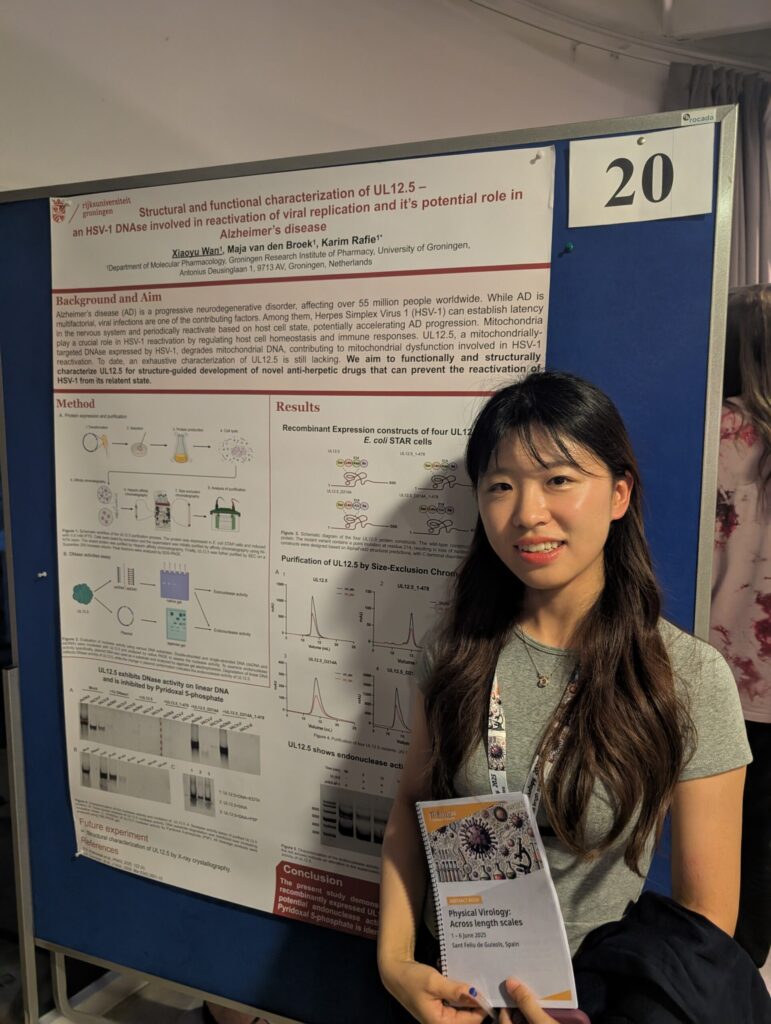
In early July Xiaoyu and Karim attended the EMBO/FEBS meeting on Physical Virology: across length scales, which brings together researchers that work on better understanding the different stages of a viral infection cycle by utilising structural and biophysical methods. Xiaoyu presented her work on UL12.5 and was constantly busy during her session with a lot of people asking questions and discussing her results. Well done and congrats on a your first poster presentation at an international conference Xiaoyu!!!


Besides the fantastic science presented and discussed during the meeting we were also very lucky to have the meeting at the beautiful Costa Brava, close to Barcelona.

Thanks again to the organisers and we are looking forward to the next meeting in 2027!!


Qiwen Tang PhD student
Members, PhD Students

Qiwen Tang

Qiwen Tang is a PhD student in the Department of Molecular Pharmacology at the University of Groningen. She is from China and obtained her master’s degree in Clinical Medicine (Neurology) from Zhejiang University, School of Medicine, China. Her PhD projects focus on the impact of environmental factors on Parkinson’s disease.

Scroll to Top