Rafie Lab

News

News

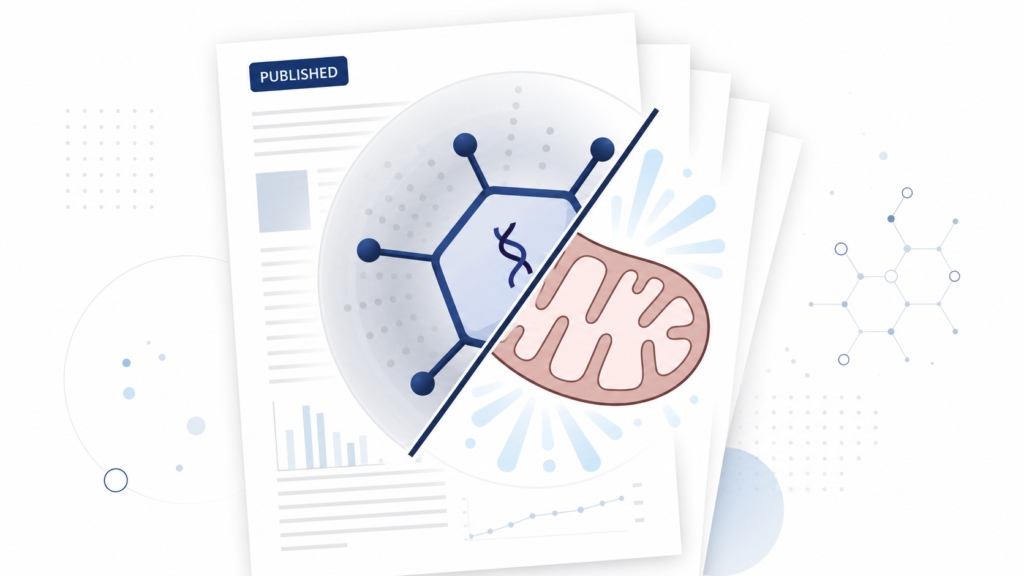
Exciting news!!! The first manuscript of the lab was just published in Microbiology Spectrum!! Here we investigate, in a comparative study, how Influenza A and human adenovirus C5 trigger ferroptosis hallmarks. Huge congratulations to Ana Manzano-Covarrubias to her firts first author paper!!
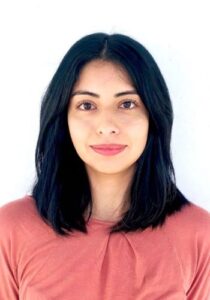
Ana Laura Manzano Covarrubias

Respiratory viruses induce ferroptosis-like features in lung epithelial cells

ABSTRACT During infection, viruses can modulate various regulated cell death (RCD) mechanisms to evade host immunity and enhance replication. However, less is known about how viruses alter the recently discovered RCD ferroptosis, which is characterized by an iron-dependent accumulation of lipid peroxidation and mitochondrial fragmentation. InfluenzaA virus (IAV) H1N1 and human adenovirus type C5

(HAdV-C5) are two common causes of respiratory infections of the upper and lower respiratory tracts and can lead to severe illness. While IAV has been shown to induce ferroptosis to support its replication, less is known about whether this is also true for HAdV-C5. Here, we perform a comparative study investigating ferroptosis features during IAV H1N1 and HAdV-C5 infections using alveolar (A549) and bronchial (BEAS-2B) epithelial cells. Our data reveal that HAdV-C5, similar to H1N1, induces lipid peroxidation in a time-dependent manner, which is partially suppressed in the presence of the ferroptosis inhibitor ferrostatin-1. Strikingly, HAdV-C5 infections only lead to changes in ferritin protein levels, which is responsible for iron storage, during late stages of infection. Furthermore, both H1N1 and HAdV-C5 infections trigger a profound mitochondrial network remodeling in A549, BEAS-2B, and primary human epithelial cells, comparable to that induced by the ferroptosis inducer RSL3, with effectsvarying by cell type and infection stage. These findings suggest that HAdV-C5, just like H1N1, can activate ferroptosis-like processes, highlighting a potential role for lipid peroxidation and mitochondrial alterations in adenoviral infection.

News

NWO XS grant awarded to the lab!!

AI-guided exploration of viral shells

Our MitoVir lab at the University of Groningen has received an NWO Open Competition Domain Science XS grant for the project “AI-guided exploration of viral capsid interfaces as antiviral targets.” [Link]

Viruses are tiny infectious particles that protect their genetic material inside a shell, similar to how an egg protects what is inside. This shell is essential for the virus to enter cells and spread. Many antivirals work by blocking virus multiplication in cells, but these can lose effectiveness and may cause side effects.

In this one‑year project, we explore a different idea: targeting the virus’ shell itself. Using artificial intelligence, we will search for weak spots in this shell in human adenovirus and design molecules that disrupt it. This research aims to open new routes toward medicines that prevent viral infections.


News

The lab is celebrating Karim getting tenure – Thanks to all for the help in getting me there!!!

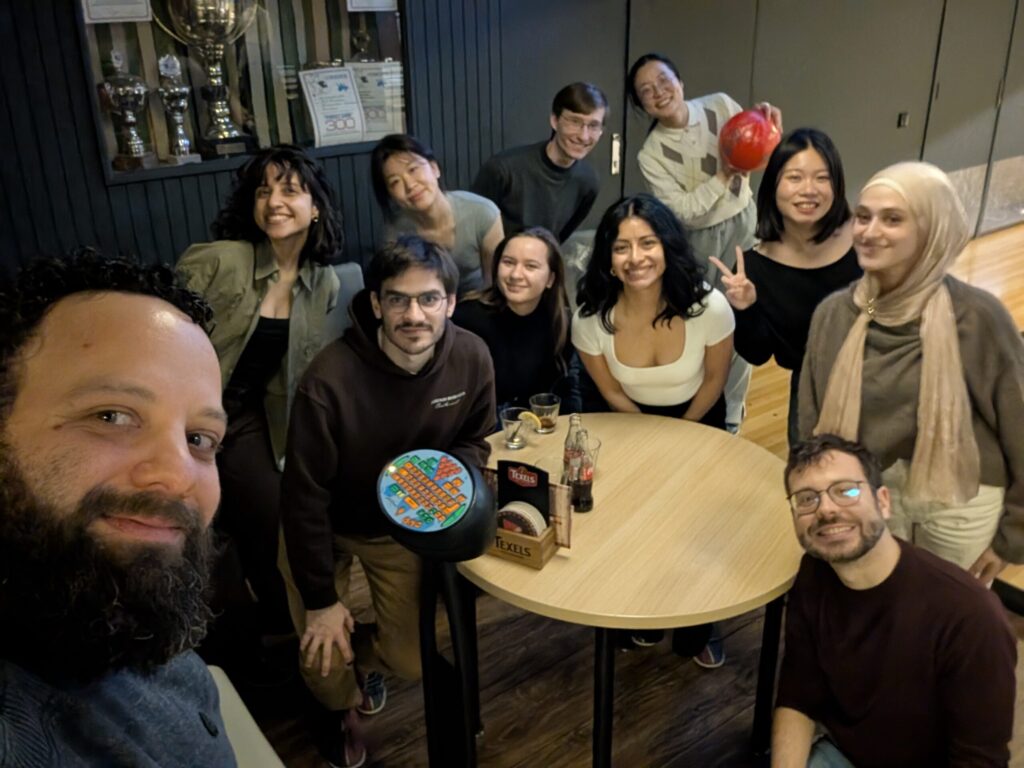
Celebrating a milestone like tenure feels a bit surreal—equal parts relief, gratitude, and excitement for what’s ahead. Rather than marking the occasion quietly, I had the pleasure of celebrating it in the best possible way: with the lab.

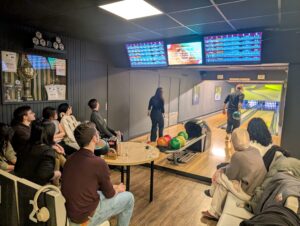
We kicked things off at the bowling alley, which quickly revealed that pipetting accuracy does not necessarily translate to bowling precision. There were a few impressive strikes, plenty of wildly unpredictable throws, and a lot of laughter in between. It was a reminder that while our day-to-day work revolves around careful experiments and data, the spirit of the group is just as much about camaraderie and shared moments outside the lab.

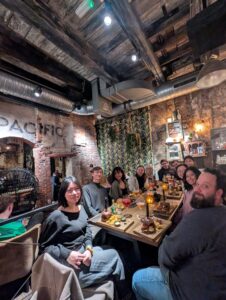
Afterwards, we headed out for dinner, where the pace slowed down but the energy didn’t. Conversations drifted from science to travel plans to the occasional debate about the “right” way to analyze data—some habits never switch off. Sitting there, it struck me how fortunate I am to work with such a talented, driven, and genuinely fun group of people.

Tenure is often seen as an individual milestone, but it’s really built on the support, collaboration, and inspiration of those around you. I’m incredibly grateful for this team and proud of what we’ve built together—and I’m looking forward to everything that comes next.

News

The lab is growing – We welcome Victor and Amanda

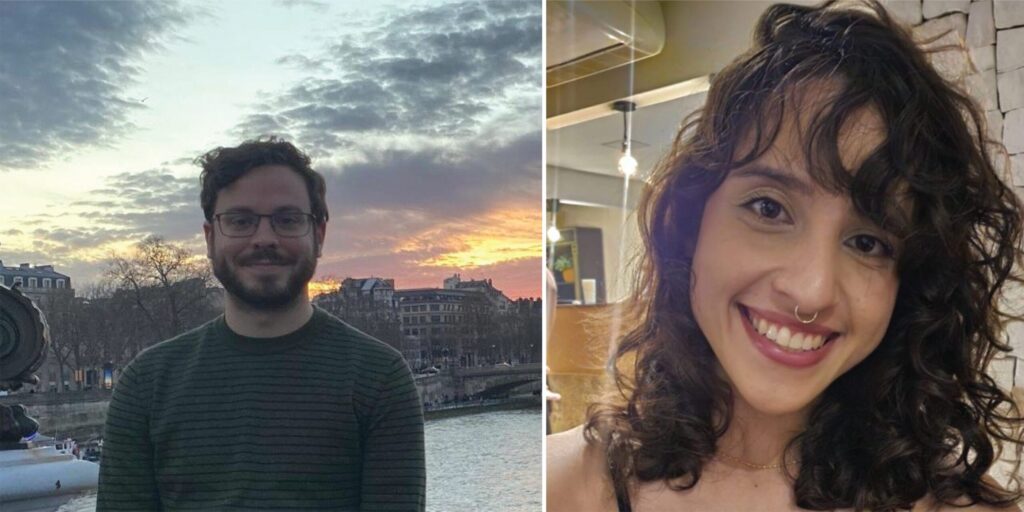
We’re excited to share that two new members have joined the Rafie Lab family: Victor Gawriljuk Ferraro Oliveira, who is starting as a postdoc, and Amanda Estevam Carvalho, a visiting PhD student from Brazil. 🎉

Victor has a background in structural biology and has spent the last few years studying how different infectious diseases work at the molecular level. He’ll be diving into the fascinating world of adenoviruses here in the lab, helping us understand how viral proteins function and how we might outsmart them.

Amanda joins us from Brazil, where her PhD work normally focuses on the lung. She’s here for a short stint in virology, exploring how adenoviruses use their proteins to kick-start and maintain infection. During her visit, she’ll be helping us identify viral “weak spots” that could inspire the development of new antiviral strategies.

Both Victor and Amanda will be working on projects centered around understanding how adenoviruses (and their proteins) promote infection — all with the goal of helping us design better, smarter antiviral approaches in the future.

We’re thrilled to have them on board. If you see them around the lab or department, please say hello and make them feel welcome! 😊

News

The Rafie lab attends the 16th International Adenovirus Meeting in Cardiff

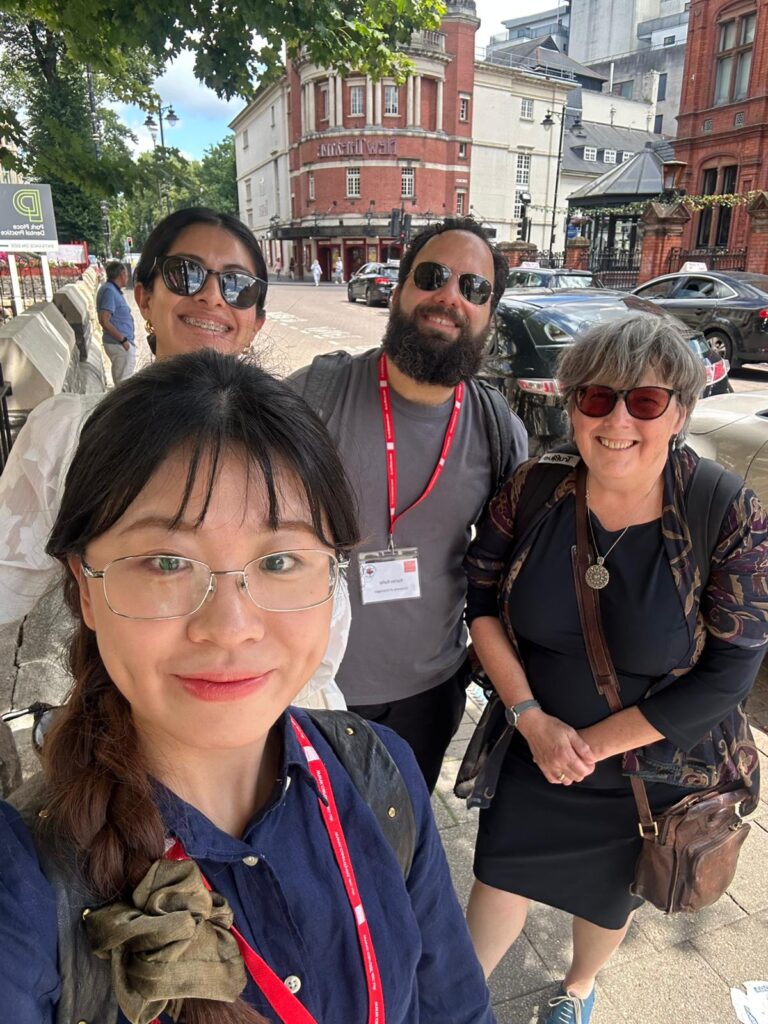
Has it really been 2 years….? Indeed, it has, which made the Rafie lab’s trip to attend this year’s international adenovirus meeting even more exciting!! Together Ana, Xiaoyu, Martina, and Karim travelled to Cardiff for a week’s long conference that promised to feature great research, amazing people, and lots of fun.

Topics covered basic adenovirology, structures, vaccines, and biotechnological tools, highlighting the tremendous versatility of these viruses.

Ana presented her work on human adenovirus C5 and how it alters mitochondrial morphology over the course of infection, a topic that attracted a large number of researchers asking many questions. Ana did a fantastic job and we are all very proud of her.


Finally, as a cherry on top of a brilliant experience, Groningen was selected as the site of the 17th IAM and we are very excited to welcome everyone in 2027!!


News

The Rafie lab attends the Physical Virology: across length scales meeting

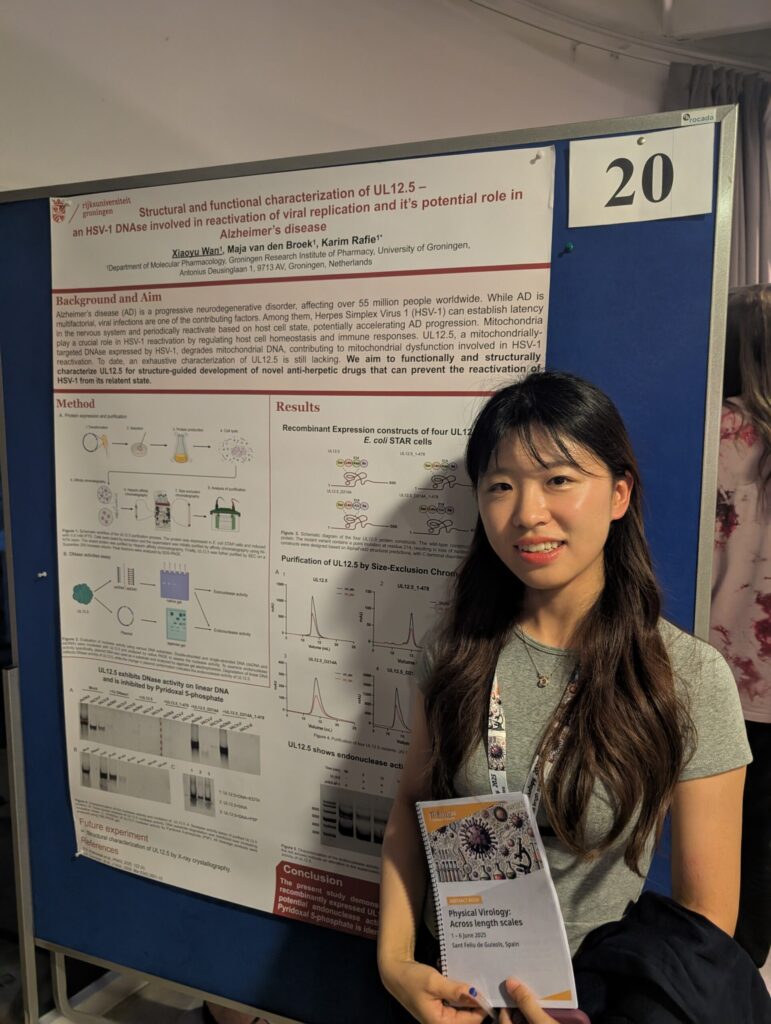
In early July Xiaoyu and Karim attended the EMBO/FEBS meeting on Physical Virology: across length scales, which brings together researchers that work on better understanding the different stages of a viral infection cycle by utilising structural and biophysical methods. Xiaoyu presented her work on UL12.5 and was constantly busy during her session with a lot of people asking questions and discussing her results. Well done and congrats on a your first poster presentation at an international conference Xiaoyu!!!


Besides the fantastic science presented and discussed during the meeting we were also very lucky to have the meeting at the beautiful Costa Brava, close to Barcelona.

Thanks again to the organisers and we are looking forward to the next meeting in 2027!!


ZonMw
News

Exciting News: ZonMW Off-Road Grant Awarded!

Some great news, we are excited to announce that we were awarded a ZonMW Off-Road grant to investigate developing small molecule drugs to be used in a combinatorial therapy with oncolytic human adenovirus. True to its name this is a project taking us off the beaten track and will hopefully lead to exciting new findings. A huge thanks to ZonMW for awarding us this grant. Read more here.

Rafie lab member
News, Uncategorized

Welcome Xiaoyu Wan, Our New PhD Student!

The lab is growing!!! We welcome Xiaoyu Wan to the group as the newest PhD student. Xiaoyu will work on some exciting research surrounding proteins from the human adenovirus C5 and herpes simplex virus 1, using macromolecular x-ray crystallography and single particle cryo-EM. It’s great to have you in the group Xiaoyu. Onwards to exciting research.

Scroll to Top